
Need Help?
(+84)824-263-333

Patient:How much does a full set of teeth implants cost Age:30 Time:2026-01-09 View:1153
When people ask “how much does a full set of teeth implants cost?” they’re rarely asking a technical question.
They’re asking because they’ve reached a breaking point — with dentures, with failing teeth, or with years of ongoing dental problems.
Clinically speaking, a “full set” does not mean one implant per tooth.
It usually refers to a full-arch implant solution, where a complete upper or lower set of teeth is supported by a carefully planned number of implants.
Depending on the case, this may involve:
Fixed full-arch implant bridges
Concepts such as All-on-4 or All-on-6
A combination of implants and prosthetic design
So the cost is not about “how many teeth,” but about how the entire mouth is restored to function as one system.
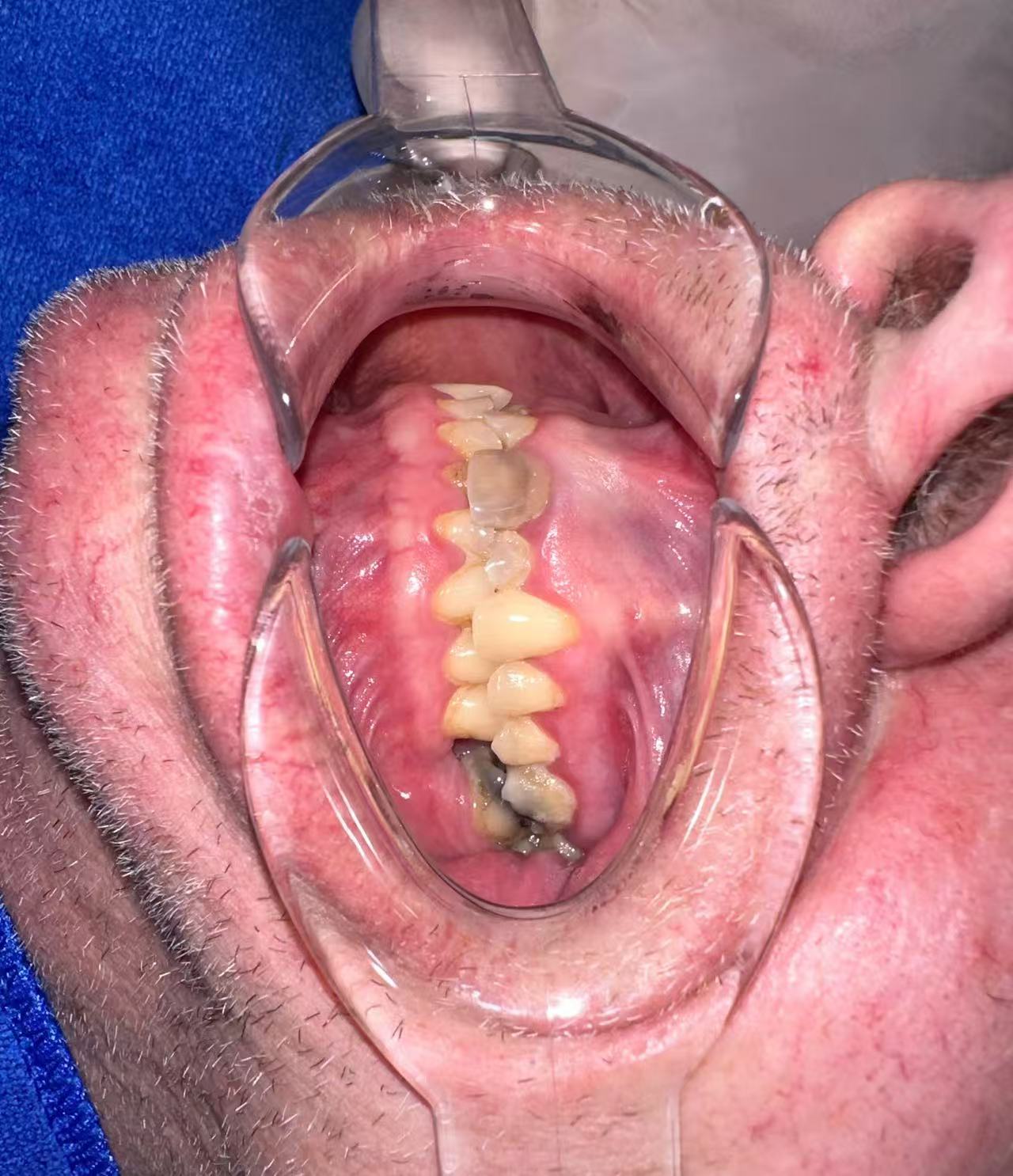
Anyone who gives a single, universal price for a full set of teeth implants is oversimplifying — or selling.
The reality is that full mouth implant treatment is highly individual, influenced by:
Bone quality and volume
Bite alignment and jaw relationship
Gum health and infection history
Whether teeth need to be removed
The desired level of aesthetics and durability
Two patients may both want “a full set of teeth,” yet require completely different treatment plans. That’s why cost varies so widely, even within the same clinic.
A more useful way to think about cost is to step back and ask:
What problem is this treatment actually solving?
A full set of teeth implants is not just replacing missing teeth. It’s addressing:
Chronic pain or discomfort
Difficulty eating normal foods
Speech changes
Facial collapse caused by bone loss
Loss of confidence and social withdrawal
For many patients, this treatment marks the end of a long cycle of repairs, adjustments, and compromises. The value lies in finality — a solution designed to last, not just patch problems.
Understanding cost means understanding where the work actually happens.
Full mouth implant cases are among the most complex procedures in dentistry. They require:
Advanced imaging and diagnostics
Digital planning and simulation
Precise implant positioning to manage bite forces
The more complex the case, the more planning and expertise are required — and that planning is invisible to patients, but critical to success.
A full set of implant-supported teeth is a custom medical device, not a standard product.
Cost is influenced by:
Implant systems and their clinical track record
Custom abutments and frameworks
High-strength ceramics or hybrid materials
The quality of the dental laboratory work
This is where long-term durability is decided. Cutting costs here often leads to fractures, wear, or premature failure.
One of the least discussed cost factors is who takes responsibility if something goes wrong.
Experienced clinicians charge more because they:
Know how to avoid complications
Understand how to manage complex bites
Plan for maintenance and future access
You’re not just paying for the procedure — you’re paying for decision-making under responsibility.
Many patients consider alternatives before committing.
Lower upfront cost, but:
Reduced chewing efficiency
Ongoing bone loss
Frequent adjustments and replacements
A middle ground, offering more stability than traditional dentures, but still removable and less natural than fixed solutions.
Highest initial investment, but:
Closest to natural teeth
Strongest bite force
Longest lifespan when properly maintained
Cost differences often reflect how permanent the solution truly is.
Cost shock usually comes from comparison.
Patients compare a full set of teeth implants to:
A car
A renovation
A holiday
But implants are none of these. They are closer to:
A long-term medical reconstruction
A functional prosthetic system
A quality-of-life intervention
The shock often fades when patients realise they’ve already spent years paying for temporary fixes that never solved the core problem.
From a purely financial perspective, this question misses the point.
The real question patients ask months or years later is:
“Can I live normally again without thinking about my teeth?”
For many, the answer after full mouth implants is yes:
Eating without fear
Smiling without hesitation
No more adhesives, removals, or repairs
That outcome is difficult to quantify, but easy to feel.
The smartest patients don’t ask:
“How much does it cost?”
They ask:
What does this include long term?
Who is responsible for maintenance?
How many full mouth cases has this provider handled?
What happens if something fails?
Understanding these answers protects you from both overpaying and under-treating.
So, how much does a full set of teeth implants cost?
The honest answer is:
It costs as much as it takes to restore your mouth safely, predictably, and for the long term.
The more important question is:
“Am I choosing a solution — or just a price?”
When it comes to a full set of teeth, the difference matters more than anything else.
Need help? We're here for you.

Get in Touch!