
Need Help?
(+84)966031995

Patient:Australian Dental Tourism Age:30 Time:2026-01-26 View:1150
Australian dental tourism is often lumped into the broader category of “medical tourism,” but that framing misses several important details. Dentistry occupies a very specific position in Australia’s healthcare system: it is high quality, highly regulated, and—critically—largely excluded from universal public coverage for adults.
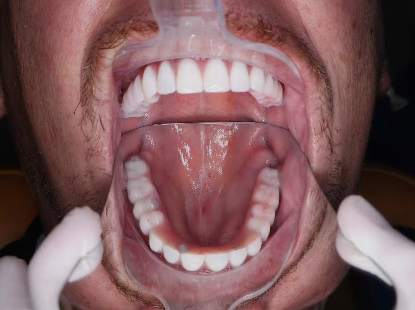
This combination creates a unique set of incentives. Many Australians are not asking whether overseas dental care is “better,” but whether it is economically rational, logistically manageable, and clinically safe enough compared to local treatment. For people already familiar with how dental systems work, the real question is not “can it be done,” but when it makes sense, and when it doesn’t.
That’s why Australian dental tourism deserves a closer, more practical examination.
Australia’s healthcare system is often perceived as comprehensive, but dental care sits outside the core Medicare framework for most adults. Public dental services exist, but they are typically means-tested, heavily backlogged, and limited in scope.
Private dental care, on the other hand, operates in a market with:
High labor costs
Strict regulatory compliance
Expensive clinic overheads
These factors are not inherently negative—they contribute to high clinical standards—but they do result in treatment prices that are difficult to absorb for many patients, especially for non-urgent or elective procedures.
In practice, Australian dental tourism is not driven by dissatisfaction with local quality. It is driven by price compression on specific treatments, most notably:
Dental implants
Full-mouth restorations
Extensive cosmetic dentistry
Multi-crown or veneer cases
These are procedures where materials and clinical time scale up quickly, and where overseas pricing can diverge sharply from Australian norms.
Contrary to the idea of “fly in, fix teeth, fly out,” dental tourism from Australia usually follows a multi-stage decision path:
Local diagnosis in Australia
Most patients start with an Australian dentist to confirm diagnosis and treatment options.
Cost benchmarking
Quotes are compared across local clinics and overseas providers to understand the price gap.
Remote case evaluation
Overseas clinics review X-rays, CT scans, and treatment plans before accepting the case.
Travel planning aligned with clinical phases
Complex treatments are often split into multiple visits over several months.
Post-treatment coordination
Follow-ups may involve local dentists for monitoring, even if the primary work was done abroad.
This workflow is less about impulse travel and more about structured cost-risk assessment.
Australian dental tourism tends to concentrate in the Asia-Pacific region, largely due to flight duration, time zones, and cultural familiarity.
Common destinations include:
Southeast Asia (e.g., Thailand, Vietnam)
East Asia (e.g., South Korea)
Select hubs with strong private healthcare sectors
The choice is rarely random. It usually reflects a balance of:
Clinical specialization (e.g., implants, cosmetic work)
English-language proficiency
Accreditation and international patient experience
Travel convenience from Australia
While cost differences are significant, experienced patients rarely choose based on price alone. In most cases, the decision hinges on whether the clinic can demonstrate:
Clear treatment protocols
Transparent material sourcing
Familiarity with international patients
A realistic approach to complications
Dental implants are the single most common driver of Australian dental tourism, and for structural reasons.
In Australia, implant pricing reflects:
High surgical and prosthodontic labor costs
Conservative treatment planning
Extended chair time and follow-up care
Overseas clinics often reduce costs through:
Lower staffing expenses
Higher procedure volumes
Integrated in-house labs
However, this efficiency model works best when:
Bone quality is straightforward
Medical history is uncomplicated
The patient understands staged treatment timelines
Cosmetic dentistry (veneers, full smile makeovers) also attracts dental tourists, but the risk profile is different. Aesthetic outcomes are subjective, and post-treatment adjustments are more common.
This is where expectations often diverge from reality, especially when patients underestimate:
The need for bite adjustments
The impact of facial structure differences
Long-term maintenance requirements
This is only partially true. While materials may be similar, differences often exist in:
Treatment planning philosophy
Time allocated per visit
Long-term follow-up structure
These differences are not inherently negative, but they matter.
In reality, many Australian dentists are cautious about taking responsibility for work done overseas, especially if:
Materials are unfamiliar
Documentation is incomplete
Warranty responsibilities are unclear
This does not mean follow-up care is impossible, but it should not be assumed.
For implants and full restorations, healing biology—not travel schedules—dictates timelines. Cases that require multiple visits cannot be compressed without increasing risk.
Most experienced patients focus on clinical risk, but logistical risk often causes more problems:
Flight delays interfering with treatment windows
Difficulty returning for adjustments
Limited recourse if expectations are not met
While many overseas clinics meet international standards, regulatory enforcement varies. Patients who assume uniform oversight across countries may underestimate variability in:
Sterilization protocols
Reporting requirements
Practitioner accountability
In straightforward cases, cost savings can be substantial. In complex cases, additional travel, accommodation, and repeat visits can narrow the gap.
Dental tourism almost always requires more time commitment, even if chair time per visit is efficient.
Some patients place high value on:
Familiar legal frameworks
Face-to-face continuity of care
Local accountability
Others are comfortable trading these for lower cost, provided risks are understood.
Large treatment plans with clear diagnosis
Patients comfortable managing logistics
Those with flexible schedules
Individuals who understand staged treatment
Medically complex cases
Unclear diagnoses
Patients expecting one-visit solutions
Those uncomfortable with uncertainty
Before committing to dental tourism from Australia, most experienced patients try to answer:
What part of this treatment absolutely requires follow-up?
Who is responsible if adjustments are needed?
How many visits are realistically required?
What happens if healing does not follow the expected timeline?
Is the cost saving still meaningful after travel and time costs?
The clearer these answers are, the less likely the experience is to become stressful.
Need help? We're here for you.
Get in Touch!