Need Help?
(+84)966031995

Patient:Dental Implants Insights – Patient Case and Decision Guide Age:30 Time:2026-01-30 View:1340
People who search for dental implants in Vietnam are usually past the “what is it” stage. Something irreversible has already happened: a tooth is missing, failing, or about to be removed. At that point, the question is no longer whether dental implants exist, but whether they make sense for you, in your situation, under your constraints—and whether traveling overseas for dental tourism is the right choice.
This is why dental implants deserve a deeper discussion than most online content provides. Implants sit at the intersection of oral surgery, prosthetics, long-term maintenance, and personal risk tolerance. For patients from Australia and New Zealand, the outcomes depend less on slogans like “high success rate” and more on process decisions, clinical expertise, and choosing the right dental clinic in Ho Chi Minh City or Hanoi.
This article approaches dental implants from an industry-aware perspective, specifically tailored for VN Dental Travel clients. We explore how implants are actually planned and placed, why different dentists recommend different approaches (like All-on-4 vs. single implants), where patients most often misunderstand the trade-offs, and how to think through the decision without marketing noise.
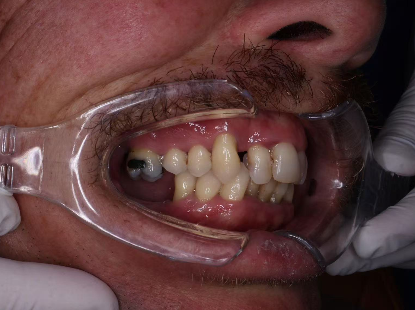
One reason dental implants are so widely recommended by prosthodontists and oral surgeons is not aesthetics, but biomechanics. When a natural tooth is lost, the jawbone in that area no longer receives mechanical stimulation from chewing. Over time, this typically leads to bone resorption (bone loss).
In practice, this means:
•Adjacent teeth may tilt or drift into the empty space.
•Bite forces redistribute unevenly, causing excessive wear on remaining teeth.
•The jawbone volume gradually decreases, changing facial structure.
Dentists tend to recommend implants because they are currently the only tooth replacement option that transmits force into the jawbone in a way similar to a natural tooth root. Traditional dental bridges and removable dentures can restore appearance and function, but they do not prevent bone loss in the same way because they lack osseointegration—the process where the titanium implant fuses with the bone.
What is often left unsaid is that bone loss is gradual, not immediate, which creates a decision window—but also a temptation to delay until options become more complex and require procedures like a bone graft or sinus lift.
Unlike dental fillings or dental crowns, dental implants involve a more complex, multi-disciplinary approach:
•Surgical placement of a titanium post into the alveolar bone.
•A healing period (osseointegration) that depends on individual biology, not just scheduling.
•A prosthetic phase (attaching the abutment and crown) that must perfectly align with your bite mechanics.
Once an implant fixture is placed, reversing or correcting mistakes is significantly more difficult than adjusting a crown or filling. This is why implant dentistry tends to attract stronger opinions among dental professionals—and stronger consequences for patients. Choosing a reputable clinic through VN Dental Travel ensures you are matched with specialists who understand these high stakes.
Although marketing materials often present implants as a single, quick treatment, the real process usually unfolds in carefully managed stages, especially for international patients traveling to Vietnam.
This stage is crucial and typically includes:
•3D imaging (CBCT scans): Essential for mapping nerve pathways and bone structure.
•Bone density and volume assessment: Determining if a bone graft is needed.
•Evaluation of bite forces and adjacent teeth.
In industry practice, planning is where most long-term success is determined. Errors here rarely show up immediately, but often surface years later as bone loss, implant loosening, or aesthetic issues. Top clinics in Vietnam utilize the same advanced CBCT technology found in Sydney or Auckland.
The implant fixture is surgically placed into the jawbone. What varies widely is:
•Implant brand and surface design: Premium brands like Nobel Biocare, Straumann, and Osstem are widely available in Vietnam at a fraction of the cost back home.
•Placement depth and angle.
•Whether bone grafting is required.
Contrary to popular belief, pain during this phase is usually manageable with local anesthesia. The larger variable is the healing response, which cannot be fully predicted in advance.
This is the waiting period, often lasting 3 to 6 months, where the jawbone integrates with the titanium implant surface.
Clinically, this phase explains why timelines differ so much between patients. Healing speed depends on:
•Bone quality and density.
•Smoking status (smoking significantly increases the risk of implant failure).
•Systemic health (e.g., diabetes).
•Surgical technique.
This is also why “fast implant” or "teeth in a day" claims need to be evaluated carefully. While immediate loading is possible in some cases (like certain All-on-4 procedures), it is not suitable for everyone.
Once the implant is stable, an abutment and a custom-made porcelain or zirconia crown are attached. This phase determines:
•Bite comfort and occlusion.
•Chewing efficiency.
•Long-term wear on the implant and opposing teeth.
Many complications attributed to “implant failure” are actually prosthetic design issues rather than surgical ones.
Dental implants are often described as having success rates above 95%. While this is broadly accurate in controlled clinical conditions, it hides several nuances:
•Success is often defined clinically as “implant still present in the mouth,” not necessarily “problem-free.”
•Minor complications (like minor gum inflammation) may not be counted as failures in studies.
•Long-term data varies significantly by patient group and maintenance habits.
In real-world practice, implants usually succeed—but how well they succeed depends on meticulous planning, excellent oral hygiene, and patient behavior.
Many patients interpret the need for a bone graft or sinus lift as bad news. In reality, it is a common and necessary adaptation when bone volume is insufficient to support an implant securely.
However, bone grafting:
•Increases overall treatment time.
•Adds cost and surgical complexity.
•Introduces additional healing variables.
The decision is not whether grafting is “good or bad,” but whether the long-term structural benefits justify the additional steps in your specific case.
From the patient side, all titanium screws may look similar. From a clinical perspective, differences include:
•Surface treatment technologies that promote faster osseointegration.
•Availability of compatible prosthetic components globally.
•Long-term manufacturer support and research backing.
Dentists often choose systems based on their training and clinical experience. Problems tend to arise when generic implants are placed without considering future maintenance. By choosing internationally recognized brands like Straumann or Nobel Biocare through VN Dental Travel, Australians and Kiwis ensure that any future maintenance can be easily handled by their local dentist back home.
The complexity of implant dentistry increases non-linearly:
•A single dental implant is relatively predictable and straightforward.
•Multiple implants (implant-supported bridges) require careful bite coordination.
•Full-arch solutions (like All-on-4 or All-on-6 implant dentures) depend heavily on complex surgical-prosthetic integration and precise engineering.
This is why outcomes vary more widely as the scope of treatment expands, and why selecting a highly experienced implantologist in Vietnam is critical for full-mouth restorations.
Dental implants require ongoing, diligent care to prevent peri-implantitis (inflammation of the tissue surrounding the implant):
•Strict daily oral hygiene (brushing, flossing, water flossers).
•Regular professional cleanings and hygiene visits.
•Monitoring of surrounding bone levels and gum tissue via X-rays.
•Bite adjustments over time as natural teeth wear down.
Implants are resistant to tooth decay (cavities), but they are highly susceptible to gum inflammation or biomechanical overload. Neglect often leads to peri-implant disease, which can be harder to manage than natural periodontal disease.
Once implants are integrated into the jaw:
•Orthodontic options (like braces or Invisalign) may be limited, as implants do not move like natural teeth.
•Changes in your bite over the years are harder to accommodate.
•Repair options depend heavily on the original implant system chosen.
This does not make implants a bad choice—but it does mean they must fit into a comprehensive, long-term dental plan, not just serve as a short-term fix.
Are you restoring essential chewing function, stabilizing adjacent teeth, or primarily improving your smile's appearance? Different goals justify different levels of clinical complexity and investment.
Dental implants reward patience. If waiting months for proper healing feels unacceptable, or if traveling to Vietnam for two separate trips (one for surgery, one for the final crowns) is not feasible, alternative treatments may be more suitable. However, the significant cost savings—often 50% to 70% compared to prices in Sydney, Melbourne, or Auckland—make the travel highly worthwhile for most VN Dental Travel clients.
Ask practical questions before committing:
•Who will maintain the implant long-term back in Australia or New Zealand?
•What happens if the porcelain crown chips and needs replacement?
•Is the implant brand (e.g., Straumann, Nobel Biocare) commonly supported by dentists in my home country?
These considerations matter far more than flashy promotional claims.
Dental implants are neither a miracle solution nor an experimental technique. They are a powerful, reliable tool when:
•Jawbone conditions are favorable or can be successfully managed with grafting.
•The patient is committed to realistic, long-term oral maintenance.
•Expectations align with biological limits and clinical realities.
They become problematic when the process is rushed, oversold, or treated purely as a cosmetic commodity rather than a medical procedure.
For Australians and New Zealanders researching dental implants in Vietnam, the most useful insight is not simply whether implants “work” or how much money can be saved. The true measure of success is whether the clinical process, the inherent risks, and the long-term responsibilities align with your personal situation. That alignment—facilitated by the expertise and guidance of VN Dental Travel—is what ultimately determines your satisfaction and a healthy, lasting smile.
Need help? We're here for you.





Get in Touch!