
Need Help?
(+84)966031995

Patient:- Age:- Time:2026-10-02 View:1042
When planning dental treatment in Vietnam, you will probably want to answer three questions first: which treatment might suit you, how much it could cost and how long you would need to stay.
A useful online dental consultation connects these questions with your oral condition. Missing teeth, discomfort, previous dental work and the improvements you want all influence the discussion.
Organising your records in advance makes the first conversation more specific and helps you compare treatment options. VNDentalTravel helps international patients submit their existing records for preliminary review by the clinical team, then coordinates the next steps in examination, treatment and travel.
You do not need to decide on implants, crowns or a full-arch restoration before making contact. Explaining the problem and the result you hope to achieve is often a more useful starting point.
A clear description of your situation is more likely to produce a useful response than simply asking how much a full set of teeth costs.
For your first enquiry, gather the following information:
Information | What to include |
Main concerns | Missing or loose teeth, recurring discomfort, unstable dentures or concerns about appearance |
Affected areas | Upper or lower jaw, left or right side and approximately how many teeth are involved |
Previous treatment | Extractions, root canal treatment, crowns, bridges, implants and gum treatment |
Treatment goals | Better chewing, fixed teeth, an improved appearance or preserving natural teeth where possible |
Available records | Dental photographs, X-rays, CBCT scans, reports and existing treatment proposals |
Travel availability | Departure city, preferred month, length of stay and availability for a later visit |
Budget and preferences | Your budget range, material preferences and the problems you want to address first |
If you do not know tooth numbers, an everyday description such as “the last two teeth on the lower left are missing” is helpful, especially with a photograph. Include when the problem started and whether it has changed recently.
If a local clinic has already provided a treatment proposal, send it as well. It provides context about previous findings and recommendations and helps with comparisons of treatment scope, materials and stages.
For patients in Australia, New Zealand and other countries, including your location and convenient contact times also helps with communication across time zones.
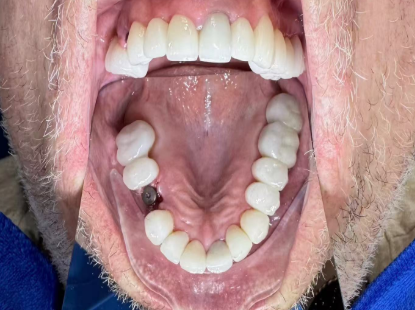
Photographs help the dentist understand visible tooth alignment, missing-tooth positions, existing restorations and appearance goals. A single smile photograph usually provides limited information about the back teeth or the relationship between the upper and lower teeth.
In good lighting, try to provide these views:
· A natural smile from the front, showing the teeth in relation to the face.
· A front view of the teeth with the bite gently closed.
· Left and right side views with the bite gently closed.
· Views of the upper and lower teeth that you can comfortably photograph.
· Close views of missing teeth, damaged areas or existing dentures you want to discuss.
Turn off beauty filters and whitening effects, and keep the images in focus. Original photographs generally retain more useful detail than collages or screenshots. A local clinic can help capture views that are difficult to take yourself.
If you want to improve your smile, you can also include reference photographs and explain whether you like the colour, length or alignment. This makes preferences such as “more natural” or “straighter” easier to discuss.
If you wear removable dentures, include front and side photographs with them in place and describe any movement, sore areas or difficulty chewing. Combining images with your experience of wearing the dentures provides fuller context.
If you already have dental images, submit the available records with their dates and details of any treatment received since they were taken.
Different imaging records contribute different information:
Record | Use in preliminary discussions | Suggested format |
Panoramic X-ray | An overview of the teeth, gaps and jaws | Original exported image with the full area visible |
Local dental X-rays | Details of particular teeth, roots or previous treatment | Files organised by tooth area or date |
CBCT scan | Three-dimensional bone and anatomical information for implant planning | Complete DICOM data and any accompanying report |
Previous examination report | Background on earlier findings and treatment | A clear electronic document or complete scanned copy |
A three-dimensional CBCT screenshot may help illustrate a point, but the complete scan allows the dentist to switch between slices and examine different areas. When requesting records from the original imaging provider, explain that they are needed by the dental team receiving your case.
For large files, confirm the transfer method before sending them through the channel provided by the team. Afterwards, check that the files are complete, can be opened and show the correct scan date.
Phone photographs of films or screens and images compressed through messaging apps can lose detail. If those are your only records, ask the original imaging provider for the original exported files and confirm how to transfer them to the receiving team.
If you do not have a CBCT scan, start with photographs, existing X-rays and a description of your concerns. The reviewing dentist can assess whether the available records are sufficient for preliminary advice and identify which further examinations may be needed. The team can then help coordinate the next steps.
A dental treatment plan depends on more than the teeth. A complete medical and medication history helps the clinical team organise examinations, treatment sequencing and any necessary communication with your doctor.
Include the following details:
· Diagnosed medical conditions and their current treatment.
· Previous surgery and any problems with bleeding, healing or anaesthesia.
· Known allergies, including reactions to medicines or dental materials.
· All current prescription medicines, non-prescription medicines, injections and supplements.
· Smoking, vaping and alcohol use.
· Previous periodontal treatment, implant surgery or other significant dental procedures.
For each medicine, provide its name, dose, frequency and reason for use. If you are unsure of the name, send a clear photograph of the packaging, prescription or pharmacy medication list.
Include injections given at longer intervals as well as daily medicines. A complete list is more useful than saying that you take several tablets each day.
Medication records support treatment planning. If an adjustment is needed, the dental team and prescribing doctor should coordinate the instructions. Continue taking your medicines as currently prescribed while those arrangements are reviewed.
After reviewing your records, a preliminary plan should explain the likely treatment directions and how different options may affect your budget and time in Vietnam.
Preliminary estimates are not a confirmed treatment plan. Costs, appointment numbers and days in Vietnam remain estimates until the treating dentist confirms the treatment scope after examination and suitable imaging. Any proposal for fixed temporary teeth immediately after implant placement remains provisional and also depends on findings during surgery.
A written proposal should distinguish the following estimates from the decisions still to be confirmed:
Plan component | What can be estimated from records | What still needs confirmation |
Treatment options and scope | Likely approaches and teeth or jaws involved | Which teeth can be preserved and the final treatment choice |
Restoration specification | Proposed restoration, materials and components | Suitability, design and clinical requirements |
Preparatory care | Possible extractions, gum treatment or grafting | Whether these procedures are needed and their extent |
Treatment stages and timing | Likely visits, appointments, stay and intervals | Final sequence and timing after examination and assessment of healing |
Immediate temporary teeth | Whether they may be an option to discuss | Clinical suitability and stability achieved during implant placement |
Costs and inclusions | Itemised estimates and proposed package services | Final scope, charges and any additional procedures after examination |
For example, replacing missing back teeth with individual implants or an implant-supported bridge may involve different implant counts and restoration designs. Full-arch treatment also requires a distinction between the upper and lower jaws and between temporary and final teeth, so that comparisons go beyond a single total.
For an explanation of treatment stages and restoration options, see the dental implant treatment overview.
Read the price alongside its treatment scope. If a fixed price is offered for defined items, ask which procedures, materials and services it covers and which clinical findings could require a revised proposal.
Imaging and consultation inclusions depend on the selected package. Ask for written confirmation of consultation fees, X-rays, CBCT imaging, accommodation, transfers and other services included in your chosen option. The VNDentalTravel dental tourism services page provides an overview of treatment and travel arrangements to discuss with the team.
Ask the team to label which parts of the proposal are based on records already reviewed and which remain provisional. Implant placement, whether teeth can be preserved, preparatory procedures and the final number of visits may change after clinical examination and suitable imaging in Vietnam. Any change should be explained with an updated treatment scope, cost and schedule before you proceed.
Remote records provide a foundation for early planning. The in-person examination connects the images and photographs with the actual conditions in your mouth.
The dentist can assess gum and periodontal support, tooth mobility, remaining tooth structure, bite contacts and soft tissues. These findings influence decisions about preserving teeth, restoration design and the sequence of care.
For implants, suitable imaging also informs the planned positions. Whether fixed temporary teeth can be used soon after placement depends in part on the stability achieved during surgery.
For crowns and veneers, the examination clarifies tooth condition, restorative space, bite and appearance goals. The restoration is then developed through the relevant fabrication and try-in stages.
The preliminary plan can distinguish items already described from the available records and those that need confirmation at the examination. This helps you understand the purpose of each stage before travelling.
If new findings lead to a proposed change, the team should explain the findings, available options and effects on cost and travel before confirming the next treatment steps.
After receiving the initial response, confirm that the team has received and opened all your records. Then check whether the proposed plan answers your main questions.
Ask who will carry out the clinical review, including the reviewing dentist’s name and role; when you can expect a preliminary written response once the records are complete; and whether the proposal will list the items requiring in-person confirmation.
Before departure, work through these steps:
1. Complete the records. Provide any additional photographs, original imaging files or medical information requested after review.
2. Compare treatment options. Clarify the scope, materials and reasons for each proposed option.
3. Review written costs. Separate treatment fees, package services, potential additional procedures and the cost of later visits to Vietnam.
4. Discuss the appointment stages. Confirm the examinations planned after arrival and the expected sequence of treatment, try-in and review.
5. Coordinate travel. Discuss flights, accommodation, transfers and companion needs around the appointment plan.
6. Keep the records of your discussions. Save plan versions, quotations and the document checklist. Update the team if symptoms, medicines or travel dates change.
Your first message can be straightforward:
“I am planning dental treatment in Vietnam in [month]. My main concerns are [describe the problems]. I have photographs, dental X-rays and previous records, and I can stay for approximately [number] days. Please let me know how to send my records, who will review them and when I can expect a preliminary written proposal. I would like the proposal to separate likely options, estimated costs and visit stages from items that need an examination in Vietnam.”
Contact VNDentalTravel to ask how to send your photographs, original imaging files and dental history for preliminary clinical review. Request a written response that separates likely options, estimated costs and visit stages from decisions requiring an in-person examination.
A useful online dental consultation in Vietnam should give you a clearer understanding of your options, budget and appointment sequence. Preparing complete records and connecting the preliminary plan with the in-person assessment provides a practical basis for your dental trip.
Need help? We're here for you.



Get in Touch!